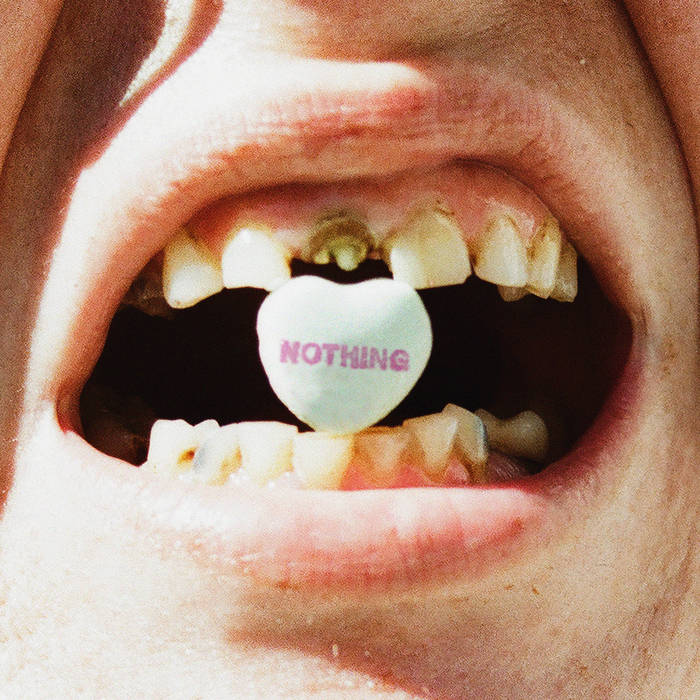
The gloomiest proponents of the shoegaze revival dial up the nihilism and turn the mirror inwards on their fifth album.
If you need some context behind the unrelenting nihilism which permeates Philadelphia based Nothing’s music, then look no further than the life story of frontman Domenic ‘Nicky’ Palermo. That guy has been through it, and he wants you to know it. His vocal delivery has long been defined by an enervated croon which implies a lived experience so bleak that his own pain is incomprehensible to the listener. Instead of making Nothing’s work off-putting, the exposed vulnerability paired with their typically dreamy shoegaze inspired atmosphere has placed the group at the forefront of the genre revival.
Nothing’s rise to prominence occurred at something of an opportune moment; my bloody valentine had reformed, and Slowdive’s musical was going through a critical reappraisal that would lead to their own reunion a few years later. Although, Nothing’s early grasp of the genre seemed more derivative of the harsher shoegaze sounds thrust forwards by alt-metal heavyweights like Deftones and Hum; after all, they were formed from the ashes of Palermo’s first artistic endeavour, the hardcore-punk band Horror Show. This was only after he was released from prison for aggravated assault and attempted murder (seriously, go check out the guy’s life story). That early sound was contextually a long way away from Slowdive’s melancholic, but sheltered home-counties shoegaze.
The influence of my bloody valentine, particularly loveless, is much more obvious as it is prevalent here. The immediately recognisable swirling dissonance and detuned guitars of mbv’s seminal sophomore album have since seen heavily copied by a swathe of alternative bands looking to recreate the famous tsunami of distortion, known as the ‘wall of sound’ which the Irish group pioneered during their early years. The more abrasive tracks on a short history of decay feel heavily influenced by this style, yet simultaneously feel like the most forgettable. The first single released, cannibal world, is rhythmically indebted to early 90s jungle, launching into with a raw breakbeat which is accompanied with the familiar blast of detuned guitars, creating a raw but uncompelling mutation. Perhaps it’s no surprise that Kevin Shields also singled out the drum’n’bass offshoot as a core influence on loveless. The same formula is applied on the slightly more memorable toothless coal, which is held together by Palermo’s spatially intelligent vocals, allowing these instrumentally dense songs to breathe with a life of their own. On their preceding album The Great Dismal, as the title suggests, the melancholia was observed externally from a lyrical perspective. This time around, it’s a far more internalised struggle against the inevitability of physical and spiritual decay.
But in an album pieced together by tracks which sometimes feel stylistically incongruous, it is the more experimental works which land better. The standout track, the rain don’t care, feels like a forgotten B-side from The Bends, as it floats with the sort of haunting melancholy which pervaded throughout 90s dream-pop. Opening track never come never nothing feels stylistically indebted to the softer side of Hum’s Downward Is Heaven, while essential tremors has a distinctively grungey Siamese Dream feel to it. The sense of familiarity which runs throughout these compositions highlights that Nothing isn’t ploughing into new territories, but instead paying homage to the array of creative influences which this album is indebted to. But in their unwillingness to commit to a singular direction, we’re left with a promising album which feels let down by its own indecisiveness.
At a time where the genre is culturally more relevant than ever, a short history decay is curiously lacking in shoegaze. Given their role as curators of the travelling festival Slide Away, it’s fair to say they’ve embraced their new position at the forefront of the reinvigorated interest in the genre; making the unexpected sonic departure from their own signature sound all the more peculiar. But in the album’s title, which is taken from a book by Romanian philosopher Emil Cioran, there is a less than subtle clue which suggests this was a deliberate artistic choice. The growth of new organisms can only occur once the decay and rot has run its course; instead of using their moment in the spotlight to deliver a shoegaze masterclass, they’ve hinted that something completely different could be next.

