
Before Jared Leto devolved into the sanctimonious Hollywood celebrity we know today, he was making slamming alternative rock music. What happened?
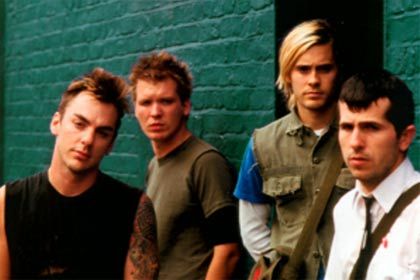
It’s 2002, and a young Jared Leto has forged a successful career in Hollywood. With a few strong supporting roles and a standout performance as drug addicted Harry Goldfarb in Darren Aronofsky’s viscerally unbearable Requiem for a Dream, his stock is high. When he teamed up with brother Shannon to form the alternative rock band Thirty Seconds to Mars, a few heads were turned. Supposedly though, this had always been the plan. As the children of summer-of-love hippies, and growing up in Louisiana, they were both exposed to music and countercultural rhetoric from a young age. So it began. After taking a break from acting in order to prioritise this new pursuit, Leto and his brother, alongside musicians Solon Bixler and Matt Wachter took to the studio with legendary producer Bob Ezrin to start work on their debut album. The latter’s work with bands like Pink Floyd and Deep Purple was crucial in forging their early space rock style. Leto, determined to be judged critically based on pure musicianship, was adamant throughout that he would not let his status as Hollywood celebrity be used in the promotion of the album. After early demos attracted attention from major labels, they continued touring on the small club circuit around the US.
In truth, the band’s origins had all the makings of a disaster. Hollywood actor pursues music career in metaphor heavy space rock? No thanks. Even the band’s name, in Leto’s own words, was ‘a metaphor for the future. The idea that we’re so close to something that’s not a tangible idea.’ It speaks for itself. Perhaps the idea itself was simply too much for some. After all, a concept album written by a white celebrity detailing the human struggle is enough to unsettle the most forgiving of listeners. But, in spite of the off putting circumstances, the album was well received by critics. And for good reason. As opening track Capricorn explodes into chugging guitars, it’s clear that Leto and co had a degree of artistry which can’t be faked by pure Hollywood privilege. It should be no surprise that he oozes typical rock-ban front man energy. The album is front loaded with a five track run which feels like its strongest material. Whilst the heaviest hitters have been and gone by the halfway point, the remainder of the album carries the thematic ideas through the end, which concludes with the powerful closing track Year Zero, which itself crescendos with Leto growling the same phrase as the tension builds to its epic climax; ‘we’ll never fade away’. A thinly veiled statement of intent, perhaps?
Their debut work might not have achieved the commercial success of their later albums, but set a foundation which would lead to thousands of ticket sales and festival headline slots. Elsewhere, Green Day had kickstarted the pop-punk and emo revolution with their politically charged American Idiot, paving the way for the likes of My Chemical Romance and Paramore to find success with angsty teens globally. Elsewhere, The Strokes and The White Stripes were making garage-rock a thing again with their new millenia image of effortless suavity. It was a busy time. But at the same time, the alternative rock scene was seeing the emergence of a new generation of stadium bands. Red Hot Chili Peppers, Foo Fighters, Linkin Park, and a host of others were selling out arenas, while radio-friendly alternative-rockers like Nickelback and Fall Out Boy were dominating the airwaves. If anything, Thirty Seconds to Mars’ sophomore album A Beautiful Lie landed in mid 2005, it couldn’t really have been timed any better.
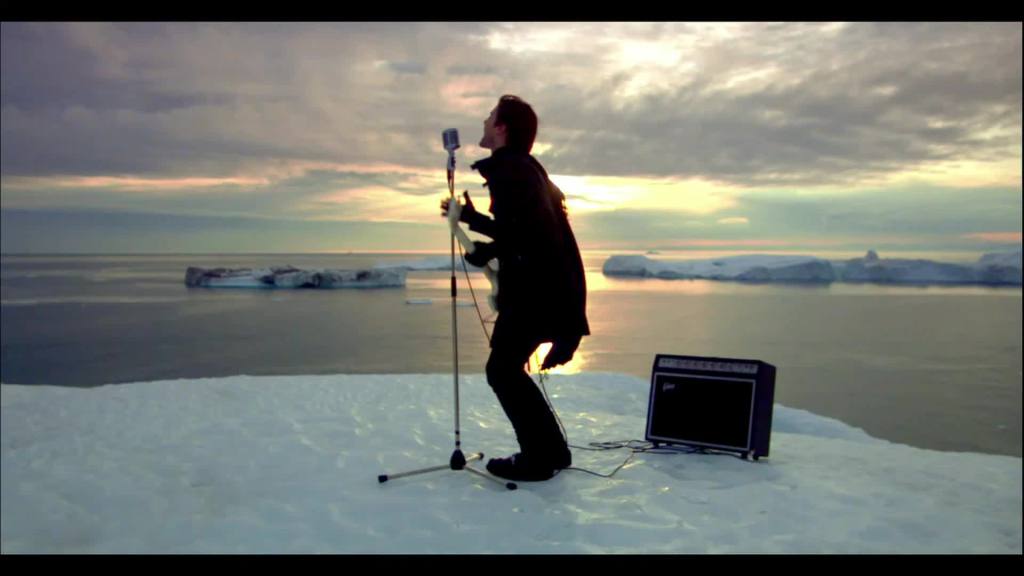
The cerebral ideas which dominated the lyrics of their debut work were largely discarded in favour of more direct, personal themes. The album was mostly well received by critics, who noted the group’s ability to produce radio-ready textural hard-rock, pairing punishing sonics alongside Leto’s alluring croon and cathartic lyrics. The album did feature some standout songs, one of which was paired with a frontrunner for best music video of the era (seriously, go watch the music video for The Kill), but also showed glimpses of the sybaritic tendencies which would begin to saturate their later work. But perhaps the most crucial by-product of this era was the emergence of the band’s neurotic legion of superfans; or as they call themselves, ‘the echelon’. United by a common feeling of belonging stemming from the band’s lyrical focus on personal upheaval and overcoming individual struggles, this subset of devoted listeners looked up to Leto as their spiritual leader; and the band were willing to oblige. In the years that would follow, the hashtag of #yesthisisacult began to trend within any discourse concerning the band. Whether a self-aware joke about the lengths to which their besotted fanbase would go to be in the very presence of Leto, or indeed an honest admission of the bizarre fixation the group’s followers had with this emerging demagogue, the outcome was the same; fans were obsessed. By the time their third album landed several years later, the mythic lore around had deepened further. Take a look at the music video for Closer to the Edge; the song is embedded with footage of emo-goth teenage fans offering rudimentary spiritual advice to, assumingly, the other fans who weren’t lucky enough to feature in the self-gratifying project.
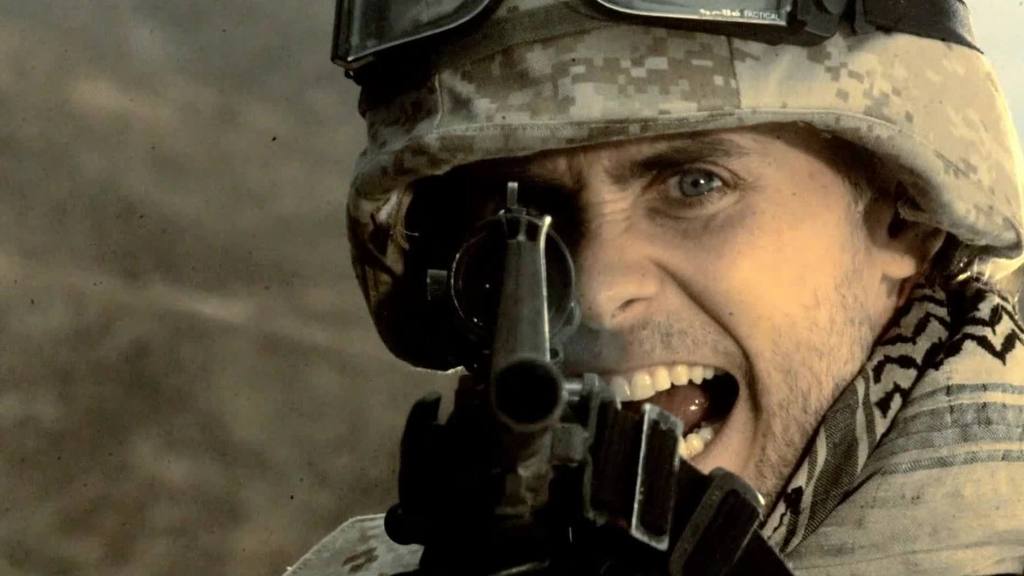
2009’s This is War did contain a few catchy singles which recalled the early days, with the ambitious expanse of influence evident across progressive rock and new wave. Although the band rejected claims that it was a ‘rock opera’, they felt comfortable with its critical labelling as yet another concept album, the subject matter of which detailing a highly publicised lawsuit filed from their former label. The controversy inspired the 2012 documentary film Artifact, and given Leto’s long standing interest in as he calls it, ‘large scale visual art’, was an unexpected opportunistic by-product stemming from the legal difficulties surrounding the album’s development. Although critical response was again, relatively positive, this marked the point musically where the decline in quality began; the titular track was accompanied by a music video which saw the Leto brothers cosplaying as US soldiers deployed in Iraq, intercut with real footage of drones strikes and clips of George W. Bush’s memorably jingoistic speeches. Unfortunately, the blatant anti-war sentiment was undercut by the laughably overblown theatrics of Jared Leto firing an AR-15 skywards at an Apache helicopter as he vehemently decrees ‘it’s a brave new world’. And that’s before the tanks and strike bombers get sucked up into a vacuum like void in the sky as the soldiers watch on in awe and Leto croons ‘the war is won’. The music alone was dangerously straddling the borderlines of myopic nonsense, with the video a visual harbinger of the increasingly self-indulgent abstract material which would follow in the ensuing decade. Cue the children’s choirs.
Aside from a few select projects, Leto’s acting career had more or less been placed on hold during the This Is War years, as the band chased down the apparently enviable Guinness World Record of most live shows performed during a single tour cycle. Perhaps the commitment to perform over 300 shows was nothing more than a gift to the echelon, rewarding them for their unwaveringly religious commitment. But in 2013, Leto returned to Hollywood with a performance which would garner an accolade which undeniably fed his egotistical hunger in a way which had yet to be suitably satiated; winning an academy award. And to be fair, Dallas Buyers Club is a heartbreakingly excellent piece of cinema, with Leto’s performance being rightly lauded as triumphant. However, this marked a significant turning point for the band. Gone were the days of separating the celebrity from the artist; by the mid 2010’s it seemed as though the band had become an extension of Jared Leto; the philanthropic, tee-totalling, holier-than-thou spiritual prophet. When their latest concept album Love, Lust, Faith + Dreams arrived in 2013, it felt as though the band had adopted a Coldplay influenced stadium ready pop-rock sound which was there to stay. This time around, critical reaction wasn’t as positive. Some publications did praise the ambition, but others felt the latest addition to their anti self-effacing canon to be ‘wildly overcooked’ and ‘empty in the extreme’. I mean, if an album has several songs which open with a spoken word mantra in a foreign language (one is in Chinese for some reason), then it does imply a desperate grapple for some kind of forged profundity where it’s not needed. But this is a band who, from this point on, have only released conceptual albums, each seeming to be increasingly derivative of whatever self-simulated lore was introduced in the preceding one. The albums which followed; America in 2018 and It’s The End Of The World But It’s A Beautiful Day in 2023 exacted the same formula which took their work from genuinely distinguishable and enjoyable alternative rock music into a questionable art-rock project which seems to go through a malignant sonic mutation every five years or so.
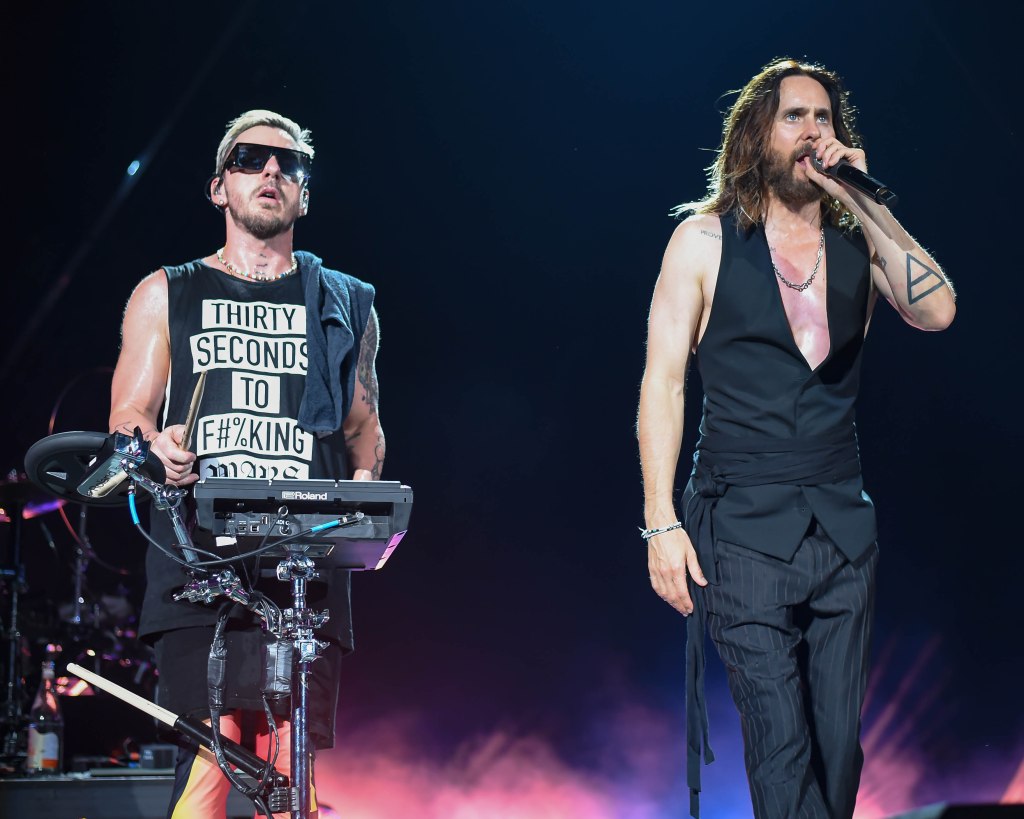
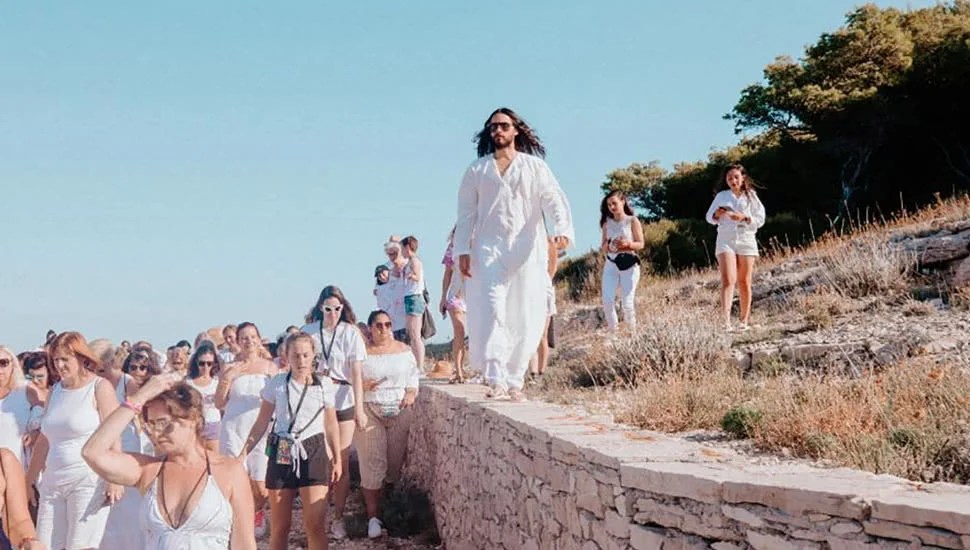
But the band, at least the Leto brothers, couldn’t care less. The fanbase, was for the most part as well, undeterred by the growing abstraction in their music. Eager to continue the swirl of rumours around the cultish aura around their audience, they launched the infamous Camp Mars events, which would eventually evolve into the Mars Island phenomenon which all but confirmed Leto’s descent into full blown prophet. Initially held in Malibu, Camp Mars was sold as an immersive experience, which alongside performances by the band, including Q&A sessions, film screenings and even outdoor camping activities such as hiking, yoga and campfires. As if that wasn’t enough, attendees would dress in white whilst Leto swanned around in flowing linen robes. And then, the event was moved to a Croatian island in the Adriatic; sort of like Jonestown but for people who listen to Imagine Dragons. Just don’t drink the kool-aid. But, in spite of all this, you can’t help but commend the Leto brothers for building a community which at its core is inclusive. The quality of music may have been lost long ago, but the enduring feeling of positivity which emanates from the discourse around the band and their followers is commendable. And crucially, it’s that sense of belonging which is felt by fans can’t be considered anything less than a general force for good, particularly given the thematic content of their work is rooted in overcoming hardship, whatever form that may take.
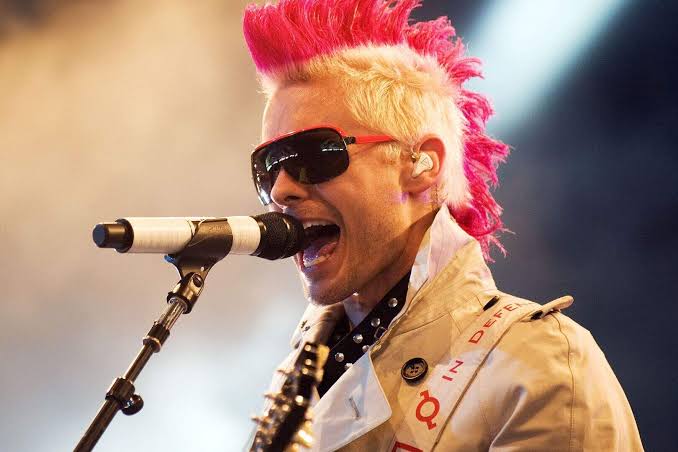
Flash forward to the present. When new year arrived in January, Thirty Seconds to Mars surprised their fans with a never heard before single recorded during the album sessions for A Beautiful Lie, alongside a 20 year anniversary album reissue and major tour announcement. Beginning in Europe in Spring 2027, they are set to perform both A Beautiful Lie and This Is War in their entirety. Whether it be pure 00s nostalgia, a cash-grab project for the brothers (or both), the fanbase lost their minds. Realistically we can’t wind back the clock to that era of music; it’s been and gone, with the golden-age of rock music videos on rotation via the MTV channel now just a distant and warm reminder of how good we had it as teenagers. But for Thirty Seconds to Mars, it shows signs that perhaps Jared Leto has accepted his musical apex is past him, and it’s time to start rewinding back to the good old days of that infamous pink mohawk. Just maybe.

