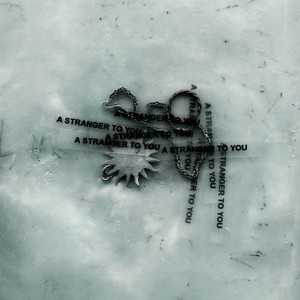
The Liverpool quartet’s hotly anticipated third album offers a sometimes muddled, but ultimately commendable kaleidoscopic take on modern metal.
Ah, the much anticipated third album. For years it has stood as a musical task of monolithic proportions, standing between alternative music’s most revered bands path to true stardom. Nail it, and the skies’ the limit. But fluff it, and it can be a real sonic setback. For Loathe, it has been six years of fevered suspense, as metal fans across the world wait to see if they can follow up their magnetic 2020 sophomore album I Let It In And It Took Everything with something equally captivating.
Allowing such a long wait between new material seemed to play into Loathe’s favour. The album, while critically heralded for its crossover potential, was something of a sleeper hit. Over the half-decade gap, the group toured relentlessly, supporting everyone from nu-metal pioneers Korn to hardcore frontrunners Knocked Loose. During that time, their music amassed millions of streams on Spotify, widening their fanbase as they built up their reputation as a formidable live act. As guitarist and producer Erik Bikerstaffe told press throughout this period, the group had been working on new music, but wouldn’t be releasing anything until they felt it could match up to the own lofty standards they’d set themselves.
Perhaps it should be no surprise that A Stranger To You deploys the same sweeping array of influences, pulled from almost every corner of the musical spectrum. After all, it was this chameleonic approach which initially set them apart from their contemporaries. Metalcore as a genre has long been considered formulaic, as bands default to juxtaposing the familiar crushing guitar and drum work with atmospheric interludes and clean vocal passages. Whilst it is rarely compelling, it has amassed a loyal fanbase who seem to hold an insatiable desire for the seeming incongruity of pairing harsh noise with blissful ambience. I guess we have Deftones to thank for that. Loathe are certainly one band particularly indebted to this approach.
Ultimately, you have to admire Loathe for truly going for it. They’ve stayed loyal to their word in an attempt to extract influence and soundscapes from pretty much everywhere they’ve looked and listened. Jazz musician Mansur Brown features on the shoegaze inspired The Way It Breaks, Sharptone labelmates Static Dress on the heavier Block of Flats, and for some reason Kiwi singer-songwriter Jordan Rakei for the acoustic ballad The Ladder. And individually, these songs (among others) stand up taller than even the best pieces on I Let It In And It Took Everything. But it is in this multi-faceted tactic which worked so effectively last time around which holds it back. Bluntly, the album suffers from a complete lack of flow, and rather ironically, the album seems to become a victim of its own ambition.
What holds A Stranger To You back from being a truly excellent piece of work is the completely muddled production. Spoken word interludes are shoehorned in between dream-pop inspired radio-rock and the more familiar guttural metalcore. And it’s these heavier pieces (Revenant, Gemini) which are invariably the weaker songs on the album. At least they might go some way to reassuring their fanbase that they haven’t completely abandoned their metalcore roots. With the band choosing to self-produce the whole album themselves, one can’t help but imagine what a second opinion might have done for the whole thing. At times there’s so many different elements competing for supremacy that they drown each other out in a cacophonic wall of noise. We’ve seen it so many times before in the film world; auteurs like Lynch or Gibson swatting away anxious producers as they chase down their magnum opus. The results, as we know, may vary. Adding the suffix ‘Director’s Cut’ onto this album title could be a helpful piece of context for baffled first time listeners trying to make sense of it all. Simply, this is the work of a highly experimental, self indulgent, but undeniably very talented group trying to realise their own stratospheric ambitions.
Still, after such a long period of suspense, Loathe has, for the most part, delivered. In a genre which is overwise limited by the reductive formulas which popularised it, one has to commend the Liverpudlians for having another go at widening its reach. Even if it does at times overextend its own technical breadth, it holds together as a slightly uneven, but ultimately compelling piece of modern metalcore. Not many other bands come close.

