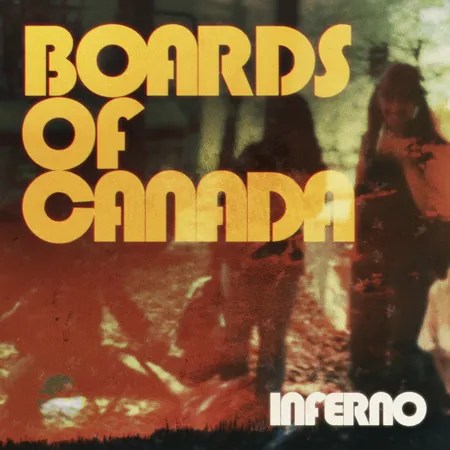
Boards of Canada long awaited fifth album offers little surprises – making it another essential work in their canon.
Thirteen years is a long time in music. As comments under the cryptically released Tape 05 earlier this month will tell you, there will be some fans who didn’t make it to see the day that one of electronic music’s most mystical pioneers returned with new sounds. But in leaving such a gap between fresh material, the duo run the inherent risk of delivering an album which can match the towering expectations of their besotted fanbase. And why wait so long to deliver us mere mere mortals with a new album? It’s impossible to say for a duo who are renowned for being tight lipped on their artistic process. One can only assume that it adds to their mystique. Or one of them was looking into doing a loft extension.
Boards of Canada have always occupied their own space within the electronic scene. Part of the esteemed cohort of Warp Records artists who emerged in the late 90s, their distinctly familiar sound has been heavily copied over the years by artists seeking to capture the same deep rooted fuzzy nostalgia which permeates throughout their studio work. When we hear those warm synth lines, hip-hop drum patterns and unsettling vocal samples we instantly know who we’re listening to. To carve out such a distinct identity in the electronic space, a genre which intentionally eschews any directly interpretable meaning due to its lack of lyrical content, has awarded them a legion of devoted fans.
But herein lies the problem. Even if the Scottish duo were to drop an album which simultaneously felt both over-prepared and undercooked, the work would still likely be lauded by fans. The logic applies to Warp peers like Aphex Twin – such is their status within electronic spheres that their fans are unable to view their material objectively. In other words; they can do no wrong. When the release of new material is so few and far between, fresh tracks are treated with a sort of respect which protects them from detached, fair judgement. Fortunately, their latest work manages to dodge the majority of these cliched warnings to deliver a wholly satisfying album which solidifies their mythical aura.
In many ways, Inferno is exactly what you’d expect from a Boards of Canada album; yep, the mid-range hip hop beats, warm fuzzy synths, and chopped up vocal samples of old VHS tape recordings are all there. It offers no real surprises, but then again, is that an issue? Over the last thirty years since they burst onto the scene with the 1996 EP Twoism the brothers have thrived on exploring new thematic ideas via their unconventional production formula which has since been heavily copied.
Yet they still feel miles ahead of their peers. In fact, the album feels as if it draws upon all the strongest elements from their studio albums to date. The frankly insane Father and Son feels like a lost track from Music Has The Right To Children, and is juxtaposed next to tracks like Hydrogen Helium Lithium Leviathan which itself recalls the menacing unease of Geogaddi. The gorgeous You Retreat in Time and Space leans on the pastoral warmth introduced on The Campfire Headphase, and Deep Time borrows from the cinematic grandeur of Tomorrow’s Harvest. In an alternate universe, it could exist on its own as a greatest hits album.
Clocking in at just under 70 minutes, it’s their longest studio album since their 1998 debut. But the haunting interludes, once a familiar staple of their work, have largely been sacrificed in favour of longer, more realised songs (only two of the eighteen tracks on the album run at under two-and-a-half minutes). Again, whether there lies any intention behind this detail is hard to eschew, except that this album largely feels like a gift to their fanbase, rewarding them for years of dedicated patience. And like all their work, it will reward repeated listening. The ability to layer their music, whether it be through subtle programming in the sound design itself, or hidden ciphers and allegorical meaning in the artwork and lyrical content, means there’s a lot to get stuck into here.
As with any band or group in their late career, releasing music which leans so heavily upon their own renowned production formulas can sound as if they’re parodying themselves. There are moments throughout Inferno which do feel uncannily familiar, as if we’re listening to something which perhaps we’ve heard before. It’s not going to go down as having the ground-breaking radical impact which their early work is revered for, but the majority of fans won’t care. They’ll just be happy to have some new material to tide them over into the next decade.

