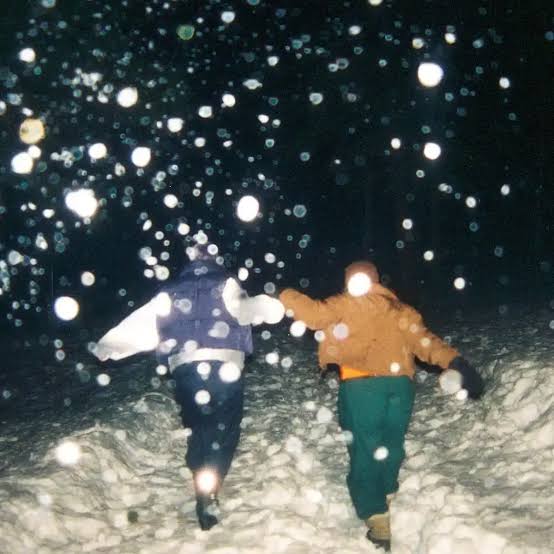
The Californian post-hardcore outfit move onto the well trodden path of self-reflection on their fourth album.
There’s an inherent danger of releasing an album so revered early on in your career; for many bands, it becomes a restrictive burden whereby all future material is judged unfairly against their fans’ chosen magnum opus. Often they find themselves releasing new material to tepid reception, and end up booked on a festival stage at the tenth anniversary of said album to play it back in full. Which draws a huge crowd, of course.
We’ve seen it so many times across the spectrum of genres, and of course it’s by no means a terminal diagnosis. But it certainly makes things trickier. For post-hardcore band Movements, their fourth LP represents a metaphorical relinquishing of the once-evergreen youth which propelled them into the spotlight, and accepting the inevitable passage of time (and being happier for doing so).
Taking the torch from trailblazers Title Fight, the four-piece arrived on the scene back in 2016 with the Outgrown Things EP, which quickly highlighted them as a promising new group. They followed this up a year later with their debut album Feel Something, which was lauded by the post-hardcore/emo community as being a virtually flawless arrival. Whilst the risk of hyperbole remains an ever present threat in this sub-genre, there was something to be said for the LP; it was a raw, at times potent album which minimised the genre tendency to overstep the line towards whiny-pop driven vocals.
There seems to be a failsafe methodology for rousing fan approval in this corner of the musical spectrum; generate melodies which can drive feelings of nostalgia, memory or indeed any other tangible emotion, and you’ll find supporters. Paired with vaguely reflective lyrics and you have a formula, albeit one which lacks originality. This isn’t to say that it doesn’t produce music which isn’t interesting, listenable, and at times compelling. It just knows how to tap into a very 21st century longing for simpler times.
For Movements, their rise to fame came through their twenties, that blissful period where the concept of ephemerality seems a long way off. On Happier Now, there is an existential acceptance that this journey is irreversible, and eventually we all need to accept the terms and conditions of life. This concept, if you can call it that, is a heavily trodden path. The inherent risk of walking this road is that it becomes yet another unimaginative rehash of thematic musings so common that all subtlety evaporates.
And sure enough, there’s not a great deal of subtlety here. The wistful acceptance of change is so on the nose that it hardly feels like an acceptance at all; lyrics like ‘I want to taste your lips again, alcohol and cigarettes. Traces of a love that slipped away’ suggests an impending relapse. And with frontman Patrick Miranda’s own meditations on mental health, he is similarly direct with declarations of turmoil; ‘Cause I’m alive, but I’m so fucking anxious I could die.’ There’s no real way that can be misinterpreted.
There are moments on Happier Now which stand out; The album opens with Title Fight style track Pulse, setting the tone before flowing into Dissolve Me, a classic post-hardcore track which feels reminiscent of the best work of genre legends Basement. And the titular track, which leans back into their emo sound in recalling early days Panic! At The Disco shows an evolution of influence beyond what came before.
Eventually, the songs start to lose their singular identity across the 43 minute run-time. If the album exists as a sonic meditation on change, then that message becomes tired and overdrawn before the album warbles its way to a conclusion. After two preceding LPs which felt uncommitted to a particular direction, loyal fans will call this a return to form. Evolution is not always welcomed in the post-hardcore scene, but for Movements, it seemed imperative. The lack of nuance however, feels like a swing and a miss.

