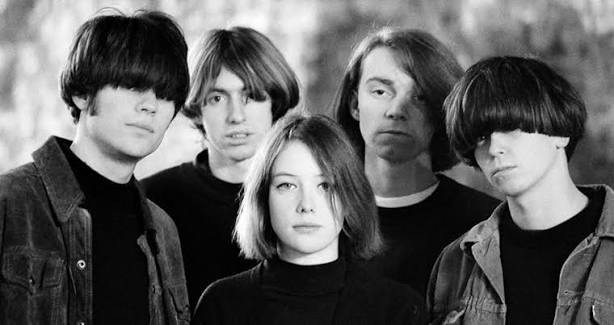
Almost forty years after it emerged, shoegaze is bigger than ever. And unlike it’s first wave of popularity, it’s not looking upon by the music press as atmospheric nonsense. Not everyone survived the witch-hunt, but one group weathered the storm through to sunnier skies. After once being heralded as future stars, Slowdive were unceremoniously ripped apart by the British music press as a furious media backlash against the sub-genre upended the careers of numerous promising young bands. Noiseland examines the short lived phenomenon, and how Slowdive rose from the ashes like a reverb drenched phoenix.
Mainstream British culture in the mid ‘90s was pretty straightforward; lager, footy and Britpop. Oh, and FHM (but the less said about that the better). Once record labels cottoned onto this, the market was flooded with music which was suitably rousing to the new ‘lads lads lads’ youth population. It was a simple formula really; anthemic rock’n’roll to soundtrack the initial buzz of nailing four pints of stella and doing a cheeky line of gear.
It was also a time in which the British music press held an extortionate level of influence over popular opinion. If they decided you were shit, then tough. You’re shit. The inexplicable wrath of journalists up and down the country effectively ended the careers of many young bands before they’d had the chance to exist on their own terms. All it took was one scathing review stuffed full of overwrought hyperbole and it was goodnight.
The biggest casualty of this sonic purge was an emergent sub-genre of indie-rock which blossomed in the so-called Thames Valley scene of the late ‘80s. Categorised by the apparently morose tendency of bands to stare vacantly down at their feet whilst they obliterated the PA system with reverb, the movement was affectionately nicknamed ‘shoegazing’ by the ever inventive British press. Amongst these new arrivals to the scene were groups like Ride, Chapterhouse, Swervedriver, and a fresh-faced bunch of nineteen year olds calling themselves Slowdive.
Formed back in 1989 by childhood friends Neil Halstead and Rachel Goswell, their initial timing was pretty opportune. The origins of the shoegaze genre had been in motion for years, as groups like The Jesus and Mary Chain, Cocteau Twins and of course, my bloody valentine were laying some core foundations. Their use of layered atmospheres with dreamlike vocals began to challenge the notion that the singer was the centralised focal point of any band. Oh, and Kevin Shields was doing some absolutely insane stuff with an electric guitar.
It might be hard to imagine for what is nowadays a fairly non-descript market town in the home-counties, but back in the late ‘80s Reading was something of a hotbed for emerging musical talent. Local promoters were proactive in booking the likes of Loop and Spacemen 3, both key groups involved in the revival of ‘60s space rock. The now closed After Dark Club was an influential assembly hall for young heads to convene to hear the latest sounds and in many cases, be inspired themselves.
After seeing mbv play there on several occasions, guitarist Christian Savill would recall studying Kevin Shields guitar work, before returning home and trying to recreate the absurd noises emanating from the amps. Neil Halstead would also look back on this time period as ‘incredibly influential’ for the whole band, as they began to envisage their own sonic identity. The band, made up of Halstead, Goswell and Savill along with bassist Nick Chaplin and drummer Adrian Sell took to the studio in 1989 to record their first demo. Combining Halstead’s adept songwriting with his and Goswell’s ethereal vocals, not to mention the vast open spaces generated from the reverb on Savill’s guitar; a unique new sound was born.
Soon after, they performed at the After Dark in support of another band, Five Thirty. As luck would have it, the head of A&R at EMI Records, Steve Walters, was in the crowd that night. Unbeknownst to them, he’d been in attendance to see the headline act, but after hearing Slowdive play he approached Savill after their performance requesting a demo. It didn’t take long for the call to come in from Creation Records label boss Alan Mcgee, and soon after the group had signed their first recording contract. Adrian Sell would leave the group soon after to pursue his studies, paving way for drummer Simon Scott to join the group, completing their final (and to this day, current) lineup.
The initial discourse around the new influx of shoegaze bands was wholly positive. When their debut EP landed in 1990, a staff writer at NME commented that ‘Slowdive have banished the barrier restricting creativity’, and their ethereal sound could ‘make Cocteau Twins sound like Mudhoney’. You can understand how this might have affected the brain chemistry of a nineteen year old looking for their break in music. But just as quickly as they were willing to build a media frenzy around these naïve young musicians, they were capable of switching lanes and writing the most vituperative of reviews to cruelly yank them back down from cloud nine.
But why? It wasn’t as if Slowdive and co’s sound changed radically in such a short period. Perhaps it was the byproduct of a sonic powertrip, in which critics enacted the sort of power which solidified their status as indisputable tastemakers. The result was a cruel snowball effect, whereby journalists would just as easily jump upon a hype train as they would a vitriol wagon. As such, this would lead to some unfortunate casualties in the shoegaze scene, some of whom would never fully recover and find success.
The musical landscape was changing quickly, too. Aside from the Britpop movement fermenting in a Carling barrel somewhere outside of Manchester, the US was seeing its most radical upheaval in mainstream music popularity for decades, as Nirvana spearheaded the Grunge movement. Nevermind generated a similar media storm to Definitely Maybe, and pretty quickly the press were besotted with these new movements. Crucially, in both instances it was a zeitgeist defining, mass-marketable sound. But in the UK, the press were particularly unforgiving.
By this time Slowdive’s debut Just For A Day landed in 1991, it was dismissed almost immediately. Although there was a positive review from NME in amongst the general acrimony towards shoegaze, it signalled the beginning of an irrevocable mass critical rejection of shoegaze; bar one crucial outlier. When mbv released the unquestionable masterpiece that is loveless, it worsened the backlash toward Just For A Day as the genre went through a critical reevaluation. If that was the gold standard of the genre moving forwards, then Slowdive had a long way to go to make up ground.
As Halstead would later admit, the recording process for their debut was rushed. After he convinced label boss Mcgee that they had sufficient material completed to release, the group were forced into some reasonably urgent studio sessions. Listening back, the LP contains an oceanic depth wherein lies some of their most foundational work, but in turn represented a muddled, in parts overproduced collection of dream-like compositions. Take Celia’s Dream for example; it shimmers with an ethereal warmth that feels like an embrace from a loved one. On Avalyn, Halstead whispers in an almost ghostly tone as the ephemerality gets dialled up a notch.
Elsewhere, there was room for a more abrasive beauty; on Catch the Breeze and Primal, they would show off their mbv influenced wall of sound as their respective climaxes smashed into a heavily fortified wall of guitars tones. Some of these tracks would become touchstone examples of the early ‘90s shoegaze sound at it’s droning ethereal best. It also included a shimmering cover of the Syd Barrett track Golden Hair, which would eventually metamorph into the closing track of their live shows decades later as a mammoth ten minute live rendition, crescendoing into a wall of cathartic noise whilst an epitagh of Barrett shone bright a like crazy diamond on the screen behind them. It was powerful stuff.
Like all of Slowdive’s work it’s been through the standardised reappraisal now that shoegaze isn’t an ignominious art-form, and critics agreed that the basis for their follow up LP can be heard throughout the record. Which brings us to said sophomore effort; Souvlaki. By the time they entered the studio in 1992 to begin work on the follow up to Just For A Day, even their own label had become wary of the popular shift away from shoegaze. The initial recording sessions produced over forty tracks, which were sent to Creation. Mcgee was quick to dismiss them as ‘all shit’, and just like that they were back to square one. During this period the quintet started to become increasingly self-critical of their own songwriting capabilities, as the realities of persistent media hatred started to catch up with them.
Atop the overall negative sentiment looming over the group, Halstead and Goswell had recently broken off their romantic relationship. On the advice of their manager, Halstead temporarily exited the recording sessions for Souvlaki and spent two weeks in a remote cottage in the Welsh countryside. This period of forced isolation produced three of the album’s most emotionally arresting songs; 40 Days, Machine Gun and Dagger. The latter in particular still exists as one of the group’s most sullen compositions, and found their way onto the album alongside the more hopeful tracks.
The LP, and indeed much of Slowdive’s work, is about atmosphere and texture. On Souvlaki, the execution was deliberately cinematic; especially in the case of the album’s standout track, When The Sun Hits. The group knew almost immediately that it would go on to be a defining track in their musical lifeline, with Scott telling Pitchfork back in 2014 that it was mutually agreed it would ‘be a big song’. After listening back, Mcgee would quickly touch base with Halstead to check he wasn’t using heroin. In fairness, you can see a pretty obvious metaphor in the title as a euphemism for shooting up.
The pressure to deliver something which felt more complete and ambitious following the disappointingly lukewarm reaction to their debut led to one of the most intriguing collaborations from their initial career run. After Mcgee relinquished full creative control to the band, they were told by Creation that they were hoping for a more commercially oriented record. As such, they encouraged them to seek guidance from producers. The overall textures of the work up to this point had remained overly raw, as they looked to capture the live noise of the varying effects battling it out for supremacy.
So, Halstead decided to get in touch with visionary ambient producer Brian Eno. Despite saying he was a fan of their work, Eno declined to produce the album as the group had wanted, but did meet with Halstead to collaborate on two tracks which would find their way onto the album; Sing and Here She Comes. The production process had been a far cry from the hazy cannabis induced recording of Just For A Day, as Slowdive aimed to avoid delivering a sophomore album which would flop commercially.
But their fate seemed predetermined. When Souvlaki was released in June 1993, the reaction was similarly muted to the response of their debut. Despite the varied stylistic growth and signature dreamy atmospherics, it was quickly disregarded, in spite of being a genre defining album of a movement. Unfortunately, it was one that was already dead and buried. It also drew the now infamous review from Dave Simpson of MelodyMakers in which he decreed that he ‘would rather drown choking in a bath full of porridge than ever listen to it again’. Bit harsh, Dave?
In the same year that Suede released their debut album to critical and commercial success, shoegaze had become a dirty word, indicative of an elitist, middle-class phenomenon perpetuated by insular, cozy, and self-indulgent musicians. In weaponising their suburban upbringings, critics argued that Slowdive’s sprawling, wordless walls of sound lacked any semblance of working-class authenticity or the political edge of rival genres. I suppose if Richie Edwards says he hates you more than Hitler is considered an genuinely authentic political edge and not hyperbolic dross, then pack your bags. It’s over.
This latest crushing setback would mark the beginning of the end for the first iteration of Slowdive. Scott would depart after the album’s release, and Halstead would use his growing interest in tripped out electronics of Aphex Twin to record the group’s experimental third album, Pymaglion. Unfortunately stripped back, haunting post-rock wasn’t really on anyone’s bingo card by that point. They were unceremoniously dropped by Creation the day after its release, spelling the end of the line. Despite containing tracks of unbelievable sonic delicacy like Rutti, Crazy for You and the other, it was barely noticed by the press. They were done with Slowdive. It was a brutal conclusion to a short lived journey which had initially looked bright, only to be stripped away following the fickle influence of the British music press. Britpop was well and truly the dominant force in the musical landscape.
It wouldn’t be for over a decade that they began to receive its flowers. Retrospective analysis of Souvlaki heralded it as landmark work in the shoegaze genre, noting that Slowidve were an unfortunate victim of the cultural landscape in which shoegaze was quickly branded unfashionable. But in their twenty year sonic exile, Slowdive hadn’t gone away. Despite the self-assured opinion of the media, these guys were serious musicians, and continued on with different projects. Whether they knew that one day new life would be breathed into the project is unclear, but when the call came, they answered. The official reformation happened in 2014 for a one-off run of shows, when the genre revival was firmly underway in the United States. High profile gigs came in and large crowds turned out in force, as this once unlucky band from the home-counties finally received the recognition they deserved two decades later. McGee stated in a 2015 interview that people finally ‘get Slowdive’, adding ‘I’m glad that the good guys sometimes win’.
Not satisfied with simply being one of those legacy acts that’s wheeled out onto main stages to perform an anniversary show of their seminal album in it’s full glory, the band hit the studio. Instead of recording for a label wherein there would be an expectation of what the end product would be, they went independent and let the creativity flow. And in doing so, they produced a genre masterpiece which arguably supercedes anything they managed during their initial run. Perhaps it was the wisdom of age, or the time spent away from the Slowdive project which allowed the quintet to flourish so. Either way, their self titled fourth LP released on Dead Oceans in 2017 is one of the great comeback albums. Thank god for the genre revival; we might never have heard it otherwise.
And so continued the major festival bookings, world tours, and swathes of new fans who could trace the origins of their new favourite dream-pop bands back to seminal influence of Slowdive. Just for a Day is now a foundational text of shoegaze. Souvlaki is now regarded as one of the definitive examples of the genre at its ethereal best. Even Pymaglion is remembered fondly as a misunderstood work of unassuming beauty. It’s been quite a turnaround. As the landscape eventually shifted away from Britpop’s musical identity of jumped up machismo and beery singalongs, Slowdive quietly emerged from the shadows of their own career to begin a musical renaissance which is still continuing to this day. For a group who always tried to remain committed to a singular artistic vision, it’s hard not to feel emotional when seeing them look out over enormous festival crowds belting out the lyrics to When The Sun Hits. Cosmic circularity is a funny old thing.

