
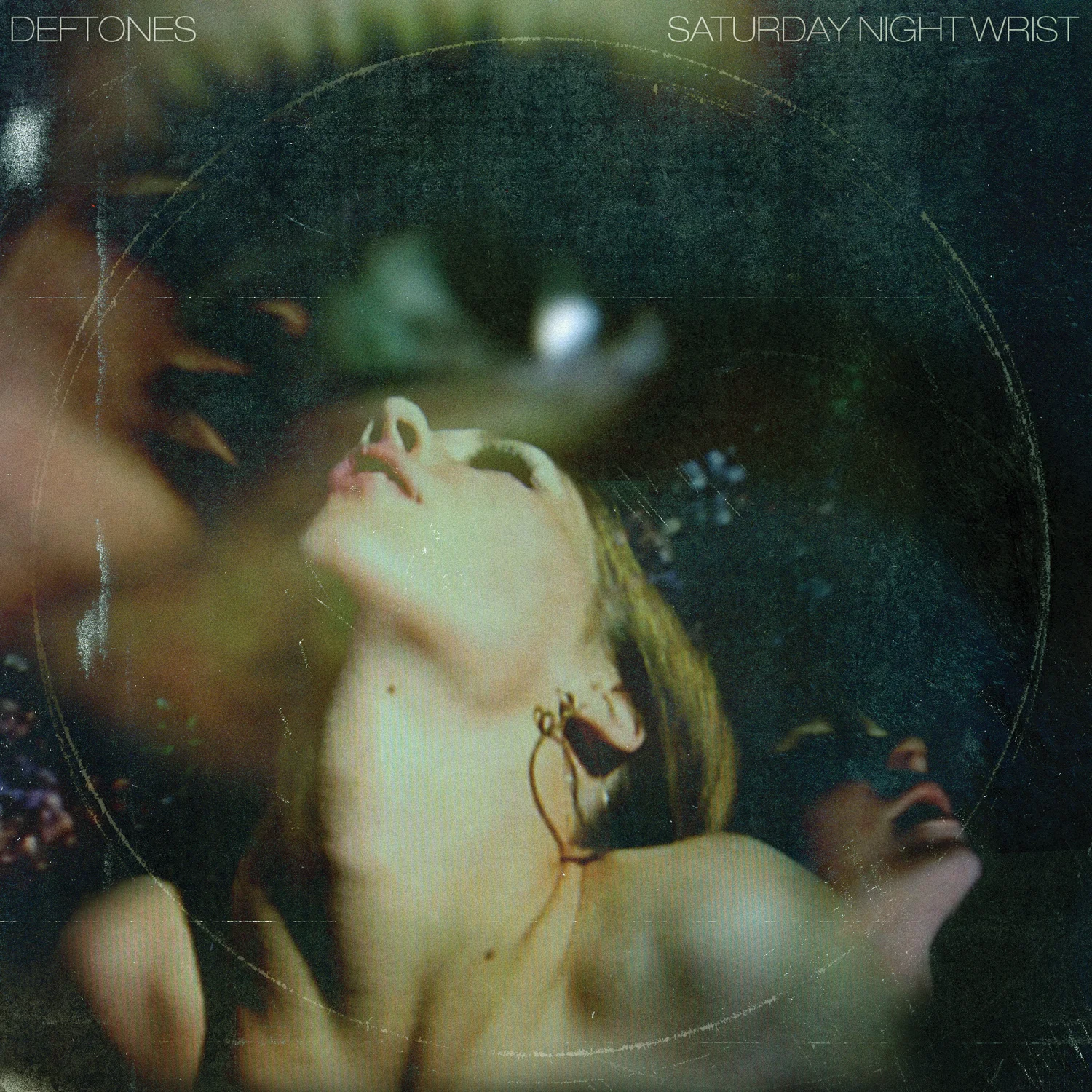
As Deftones’ often misunderstood fifth album turns twenty, we revisit the fractured recording process that very nearly tore the Californian alt-metal legends apart.
Deftones’ frontman Chino Moreno has made it no secret that he does not like Saturday Night Wrist. Recorded during a time which is now fondly referred to within the band as ‘the bad times’, it was the drawn-out final product of a tumultuous era wherein creative differences, personal struggles and external corporate pressure were pushing the quintet to their respective breaking points. Whilst its legacy remains a complex one, it also represents a crucial artistic turning point; bridging the gap between their early albums’ unflinchingly confrontational sonics and their later career focus on increasingly atmospheric sounds and softer textures.
A zoomed out perspective on the fractured creative process might lead to the assumption that Deftones had lost their collective identity as a group. What seems clearer now with the benefit of hindsight is they were reassessing their individual identities, making the band’s artistic vision an afterthought. Regardless though, they laboured through to an end-result. Upon release, critical reception to Saturday Night Wrist was generally positive, but some were notably polarised by its sprawling, disjointed structure. Given what we know in retrospect, it’s moderately amazing that anything came out of this period. To truly understand how their creative relationships descended into something so obstinate, we have to look back at their even more misunderstood preceding self titled album from 2003.
After being caught up in a wave of mass-categorisation which left them being labelled as just another tough, in your face nu-metal band from California (which based on their debut Adrenaline, they were), Deftones made an initial effort to break away from that reductive genre-tag in the late 90s with their 1997 follow up effort Around The Fur. Described by lead guitarist Stef Carpenter as an honest attempt to capture something authentic, they introduced a loud/quiet dynamic which would go on to become one of their defining musical characteristics. But in truth, it wasn’t until the release of their third album White Pony that their reputation for dynamic experimentation would be fully established. Incorporating everything from to post-hardcore to trip-hop, the finished product was a triumphantly idiosyncratic work of bludgeoning contemporary metal taken further outside the genre confines that it had ever ventured prior.

Given the critical and commercial validation that came from the success of White Pony, the group found themselves imbued with a buoyant confidence, along with a degree of creative freedom entrusted to them by record label Maverick. However, this era had ushered in the beginning of creative interpersonal frictions within Deftones. They maintained their commitment to challenging convention, but all whilst the musical and lyrical content became significantly darker and more oppressive. What it would translate to was a physically aggressive record; laden with explosive guitar distortion, heavier incongruity between dynamic shifts in sonic weight and increasingly volatile vocal performances from Chino Moreno. To this day it remains an uneven, if at times compelling record which contextually checks out as the sound of a band in the throes of misalignment.
Which brings us to their fifth outing. After a fraught recording process, the natural remedy might have been a straightforward doctrine of distance between the band members, allowing for a thawing of creative tensions. However, the reality of commercial pressure from the corporate industry forced them straight back into the studio. Maverick weren’t best pleased with the lack of commercial return that was forecast following the success of White Pony, so were insistent that they recoup their losses. When Deftones went back into the studio in early 2004 it was not on account of creative impulse, but forced corporate pressurisation. If the recording sessions for their self-titled album had been defined by heated creative friction, then Saturday Night Wrist captured an increasingly apathetic environment, wherein communication seemed to deteriorate with an overarching theme of relational erosion.
The fundamental logic behind this heightened divergence in creative alignment is ironically the unique characteristic behind what makes Deftones so compelling as a band. Since they made the move towards their now defining identity of sonic duality, there’s been a perpetual tension between Chino Moreno and Stef Carpenter. Finding a middle ground between the incongruity of that loud/quiet dynamic might result in a captivating dichotomy, but it’s the outcome of a constant tension between two very different driving influences. As Moreno was becoming increasingly focused on further exploration of the dreamier, shoegaze leaning sounds which had begun to permeate through on their previous two albums, Carpenter was less than enthusiastic about this segue.

As an archetypal metal guitarist, his interest (and unquestionable strength) was in the thundering riffs and mechanical power chords, delivered via seven string guitar and heavily influenced by the likes of Fear Factory and Meshuggah. This unwavering insistence to retain the core indicators of their most quintessential metal influence drove Moreno towards a heightened focus on his own developing side project, Team Sleep. Without the expectation to incorporate the unflinching grit of Deftones’ heavier facets, the experimental side project allowed for an unrestricted exploration of influences across shoegaze, downtempo and ambient electronica. But in doing so, his commitment to the recording process for Saturday Night Wrist began to wane as dissension dissipated into indifference.
The album also marked the departure of longtime producer Terry Date, who had previously been credited with helping define their early sound after working with them on their first four LPs. After some deliberation, Moreno and drummer Abe Cunningham pushed for recruiting the services of Bob Ezrin, a well known figure renowned for his work with the likes of Deep Purple and Alice Cooper, and most notably on Pink Floyd’s operatic The Wall. The intention was to help impose a sense of discipline on the production process, challenging the band to generate their best work under stricter but still creatively conducive conditions. Funnily enough for a band already at the end of their tethers, it didn’t really go as planned.
As frustrations began to boil over at the cyclical loop of songs being forced through layered approval from Ezrin and the bosses at Maverick, the band drifted further apart, eventually recording their individual contributions completely separate. Each of them were battling their own personal relationship issues, including Chino Moreno’s drawn out divorce proceedings. As the professional rift between them continued to widen, the album was pieced together by these fractured recordings, ultimately contributing to its splintered cohesion as a finished product. Date was brought back in early 2006 alongside Shaun Lopez, longtime affiliate of Moreno, after all of the vocal contributions were scrapped by Maverick. Finally, after what seemed like an insurmountable stack of odds against it, Saturday Night Wrist was completed and released on October 31st 2006.
Across it’s almost hour long run-time, there’s a multitude of stylistic divergences which outline the vastly eclectic influences which drove it to a laboured end product. Opener Hole In The Earth has a huge anthemic quality which rises into a mid section of colossal guitar work and soaring vocals from Moreno, in which he revealingly croons ‘I hate all of my friends, they all lack taste sometimes’. If ever there was a micro-cosmic example of his example of his dissent during this era, then this is it. Elsewhere, Rapture and Rats!Rats!Rats! show Stef Carpenter’s influence retained in punishing fashion, with the latter concluding on a jaw-dropping vocal shriek from Moreno. Experimentation runs throughout on the glitchy ambient guitar interlude U,U,D,D,L,R,L,R,A,B, select, start (which really rolls off the tongue as a title), as well as the post-rock Riviere and the controversial and frankly, bizarre trip-hop track Pink Cellphone.
Yet it is on the dreamier, shoegaze influenced tracks which hold the greatest insight into why this album has become such an important touchstone in Deftones catalogue. In recent years they have been the beneficiary of an organic re-exposure of new ears to their sound, primarily through viral explosions of certain tracks from Saturday Night Wrist on Gen-Z social media platforms (most namely TikTok). Tracks like Xerces and Beware showcase this atmospheric sound aptly, but it was the emotional centerpiece Cherry Waves which would later captivate future listeners with its melancholia tinged romanticism. Conceived as a song about testing the resolve of commitment between lovers, it marked the most successfully integrated union between shoegaze and alternative metal that Deftones had been experimenting with until that point.
Perhaps it was in the realisation that these two countering worlds could indeed exist harmoniously that allowed the band to reconcile in the aftermath to the album’s release. After spending 2007 on tour, they returned to the studio in 2008 to begin work on a follow up tentatively entitled Eros. Moreno acknowledged that the fragmented approach to recording on Saturday Night Wrist had adversely impacted their relationships as a creative unit, and they mutually agreed to return to a more collaborative approach. And then in November 2008, tragedy struck as bassist Chi Cheng was involved in a serious car accident, leaving him in a minimally conscious state. Understandably, everything was put on hold. As it would turn out, Eros would never see the light of day.
As often becomes the case for many bands confronted with tragedy, Deftones trajectory was realigned. After stepping back from the limelight, they would eventually reach conclusions that would refocus their creative energy for what followed into their later career. When they did return in 2010 with the critically acclaimed Diamond Eyes, there was a noticeable shift in their disposition as a collective unit. Perhaps on account of the forced confrontation with mortality, the conflict which had defined their mid-career run had virtually evaporated, resulting in a fully aligned creative vision which leaned further into the atmospheric beauty of Saturday Night Wrist’s more emotionally arresting moments.
Cheng would never fully recover from his accident, eventually passing away in 2013 from complications stemming from the injuries he sustained. Whilst it would be wrong to imply that this tragedy was the catalyst for their later career resurgence, it did mark a point at which Deftones were forced to re-evaluate their own creative relationship. What seemed to come from it was a collective agreement to move forward as one, allowing the tension which exists in their style to unite them and not divide them. Even if the era surrounding Saturday Night Wrist is remembered by the band as being one defined by hardship and pressure, it now stands as the crucial artistic turning point at which their creative vision for their late career bloom began to fully synthesise, and propel them to their now solidified position as one of the definitive acts who typify the alternative metal genre. Maybe one day Chino will come around to it.